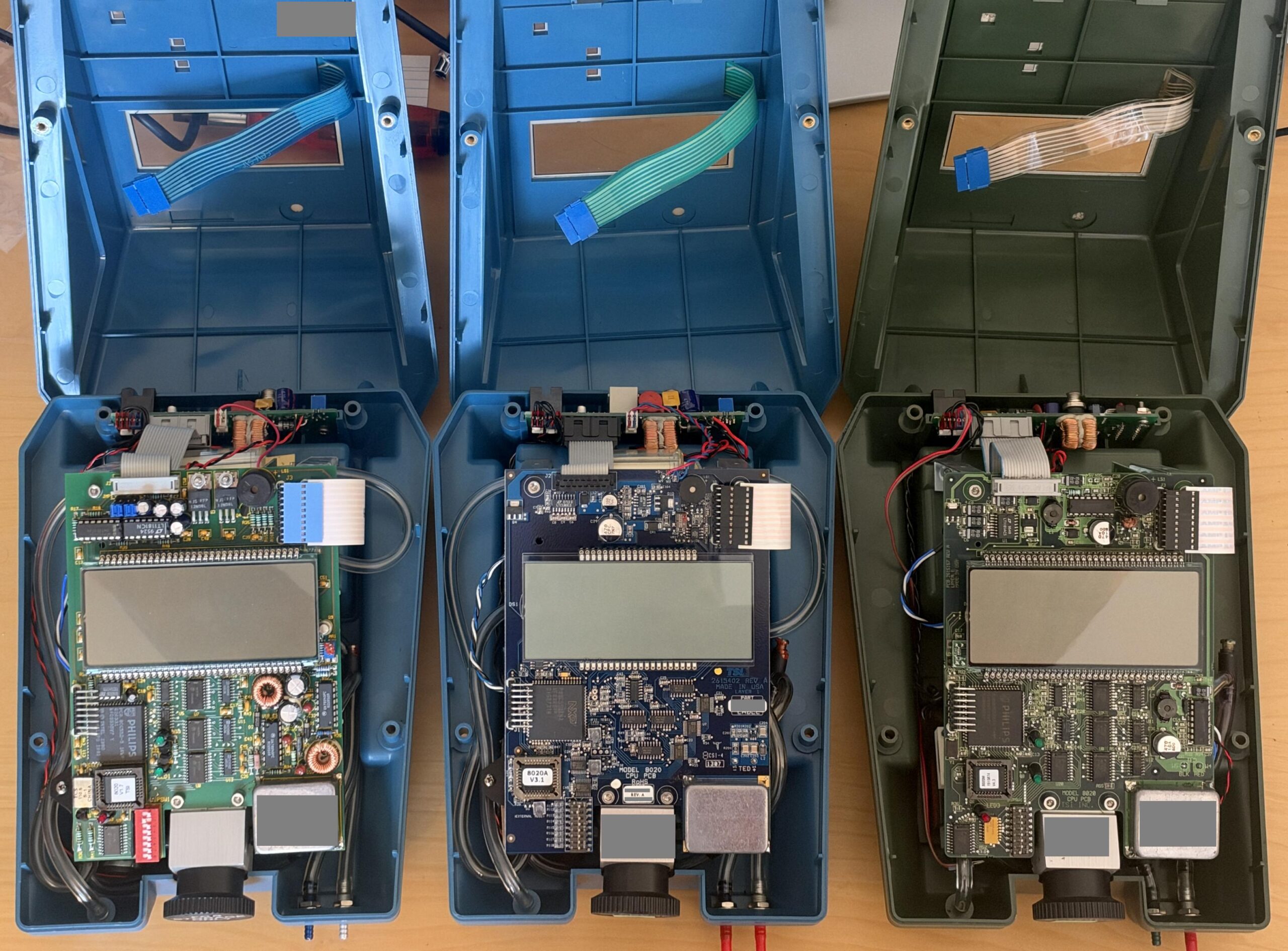
Thanks to some friendly associates, I was able to peek inside a congregation of 8020s, including an 8020 (produced 1993; last calibrated 2008), and 8020A (produced 2006; last calibrated 2010), and an 8020M a.k.a. M41 PATS (produced 1999; last calibration date lost to the mists of time).
The most significant differences that I noticed are:
- The primary circuit board appears to have evolved over time – each device is, to some degree subtly, to some degree very obviously, different.
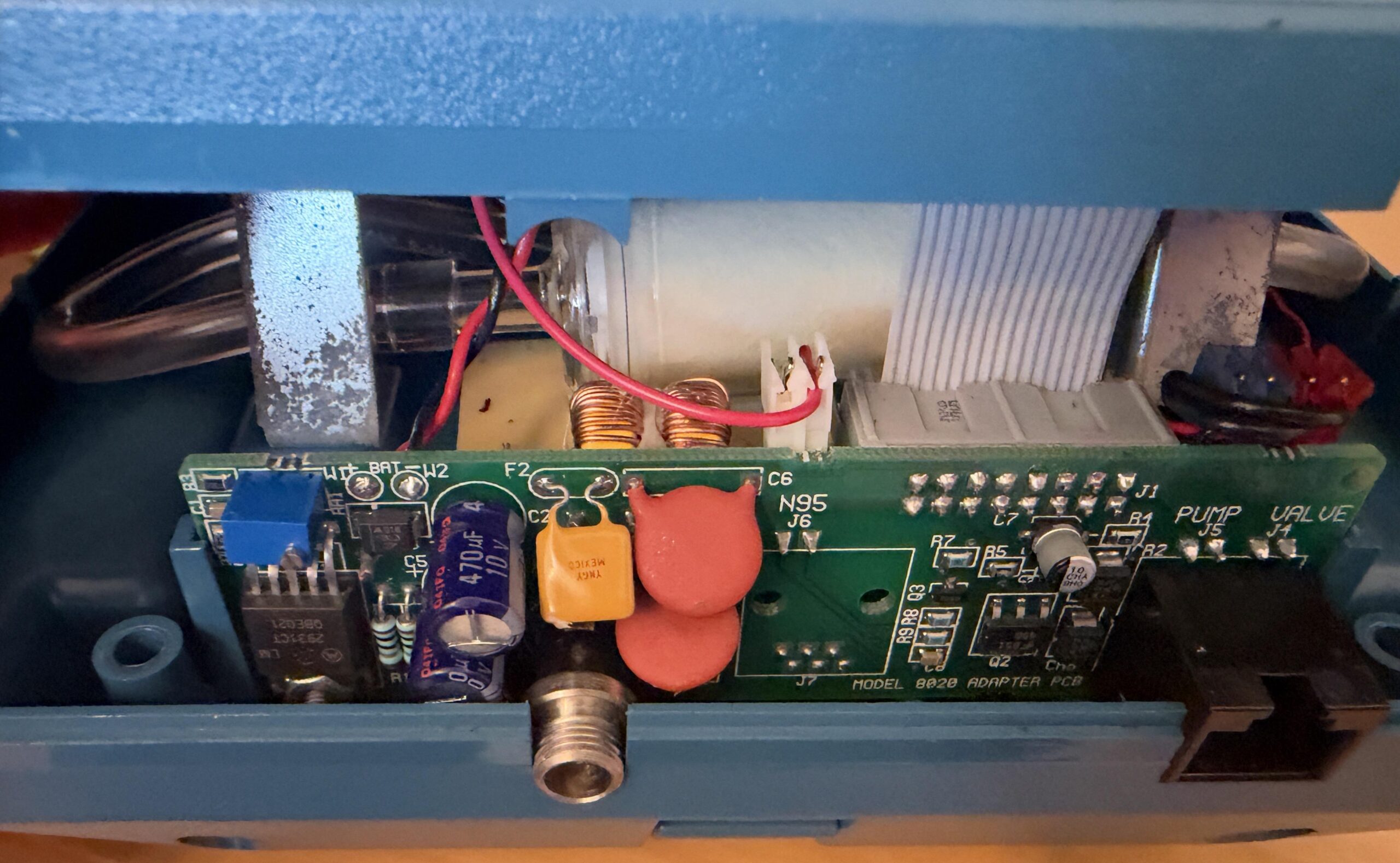
- Both the 8020 and 8020A use the same input/output circuit board, except that the 8020 version (unsurprisingly) does not populate the additional connector for the N95-companion/8095 (it looks ready to accept the connector, i.e. you can see the same printing and holes). The 8020M uses a different input/output board, which does not have any space for this connector.
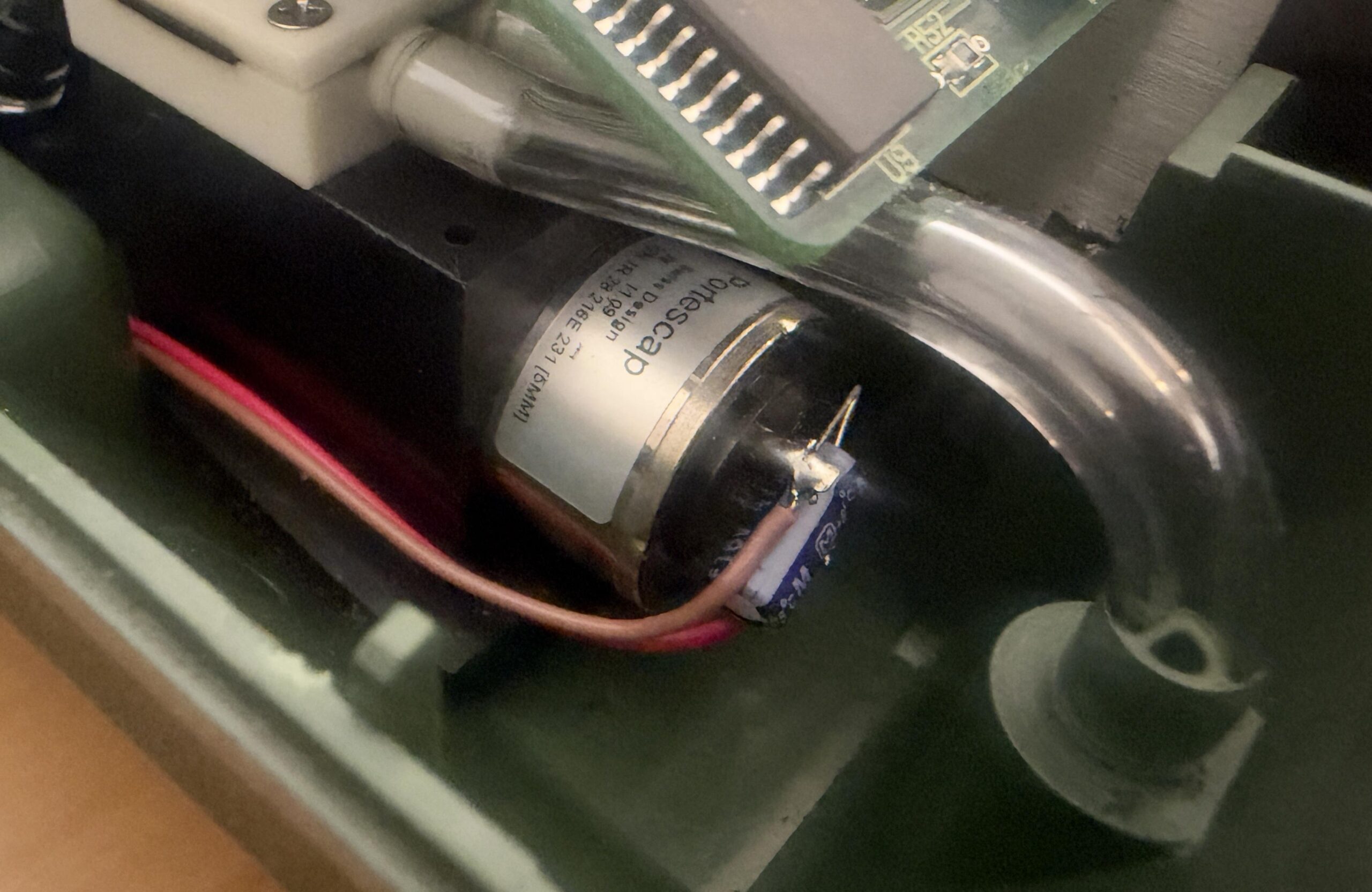
- This 8020M appears to use a different pump. However the pump is dated 11.09 (after the device’s manufacturing date in 1999), which suggests that this pump was retrofitted during calibration/repair.
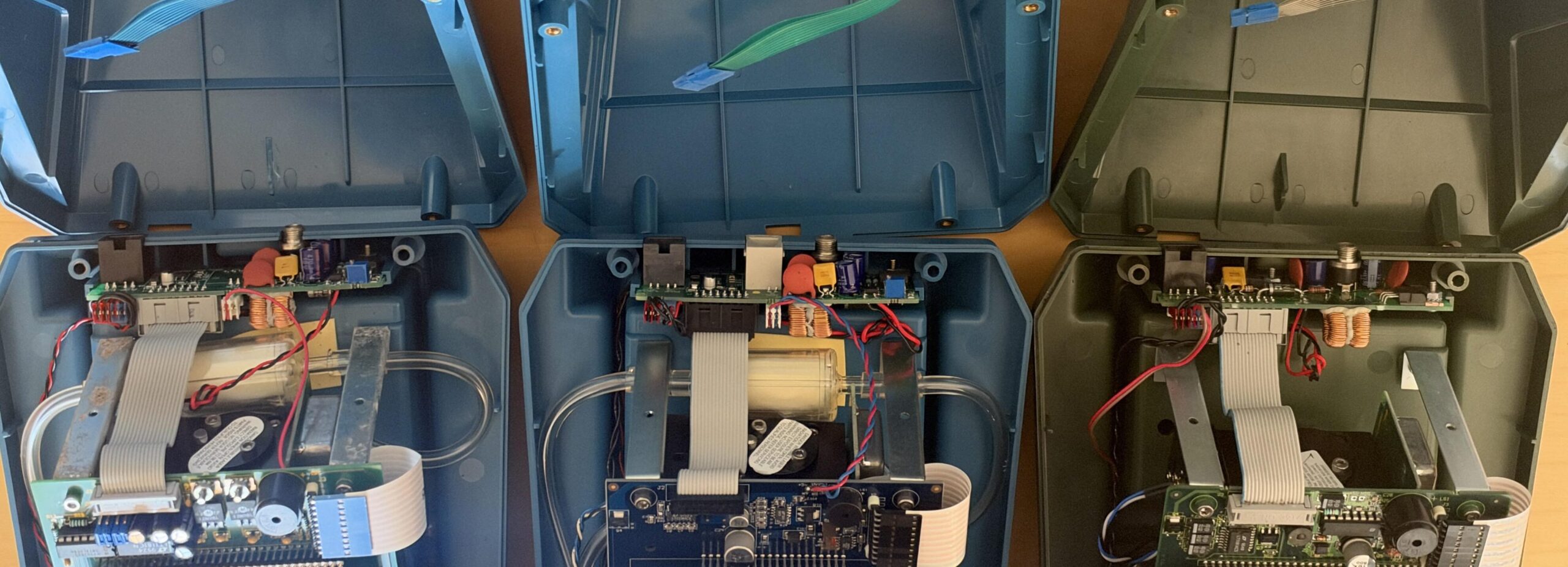
- The 8020M lacks a filter between pump and outlet. (All devices have the two pre-pump filters, as shown in RFT-032).
- The cases look to be identical (other than colour, and hole for the N95-companion connector), however the overlay on the 8020M is opaque over the hole for the external-control LED and lacks corresponding labels. You can still (faintly) see that this LED is illuminated when using an 8020M with external control.
- Detaching the upper shell of the 8020 and 8020A required removing 4 Phillips bolts, however for the 8020M I needed a 7/64″ (!?) hex key (yes, really, and rather annoying to obtain – I guess they want you to know they made it in an imperial country!?!?). The 7/64″ hex key is needed for other parts of the 8020 and 8020A, so I’d recommend having one on hand either way (all the photos I’ve seen online show Phillips bolts being used to attach the casing on 8020+8020A, so I don’t think these were retrofitted).
(I did not open up an 8020Mgen2 a.k.a. M41A1 PATS – I’d be rather hesitant to open one of those up without good reason, as they’re difficult to obtain, and rather on the expensive side.)
The three devices side by side: 8020 (1993), 8020A (2006), 8020M / M41 PATS (1999):
A different perspective to show the area behind the condensation chamber / optics (note lack of an additional post-pump filter in the 8020M – that’s the thing that looks like surprisingly like a zero-check filter, connected to the clear tubing on either side):
8020M pump (note also: pump output routed directly to the outlet):
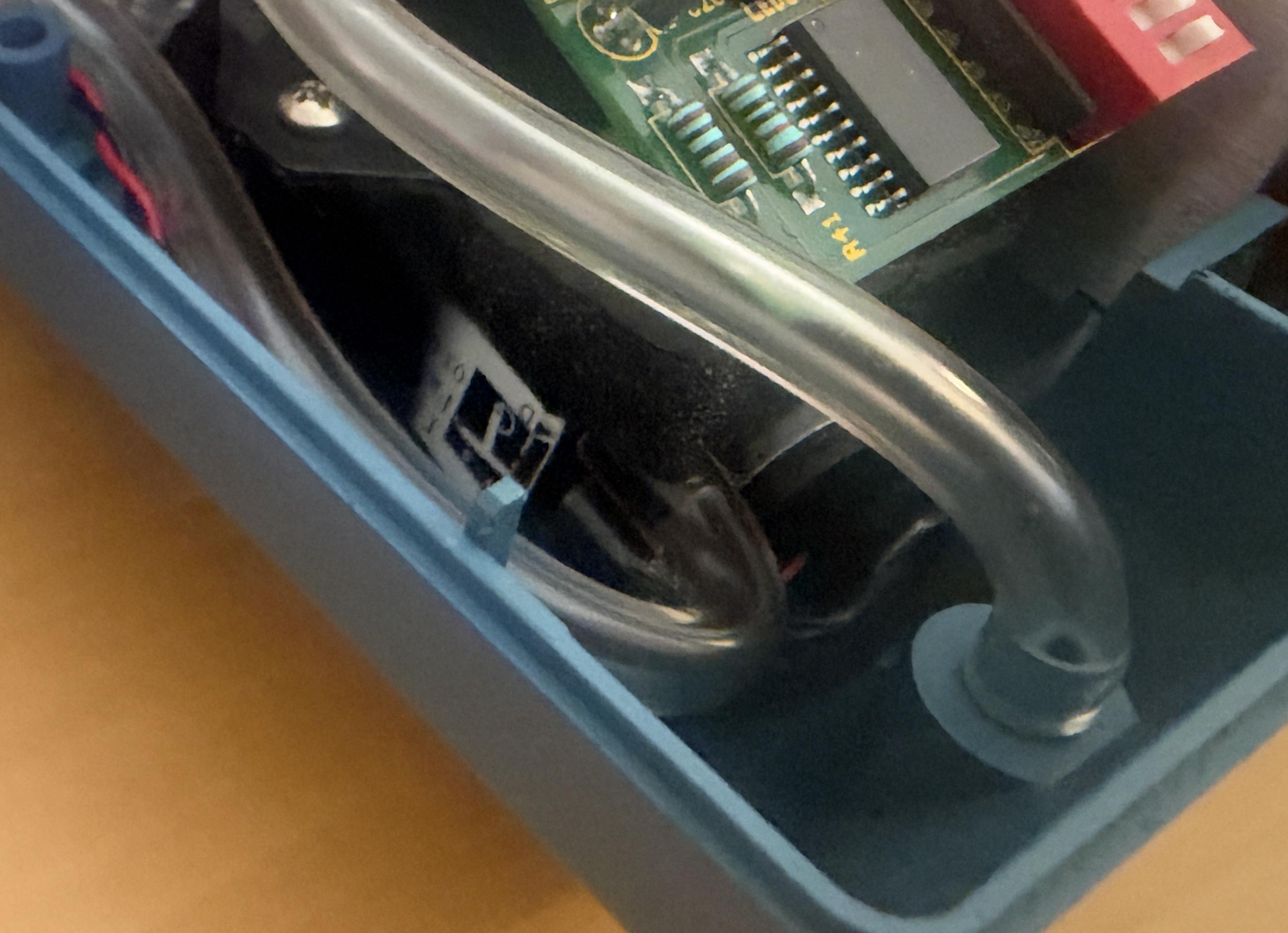
Pump on the 8020 (sorry it’s hard to see because of the foam, the 8020A is the same – note that the pump outlet is routed all the way to the filter fitted at the top end of the device, and the filter output is routed all the way back to the outlet at the bottom right of the image):
Input/Output board on the 8020 (with the N95-companion connector not populated):
Input/Output board from the 8020M (please excuse the grime, this one is due for some deep cleaning imminently):
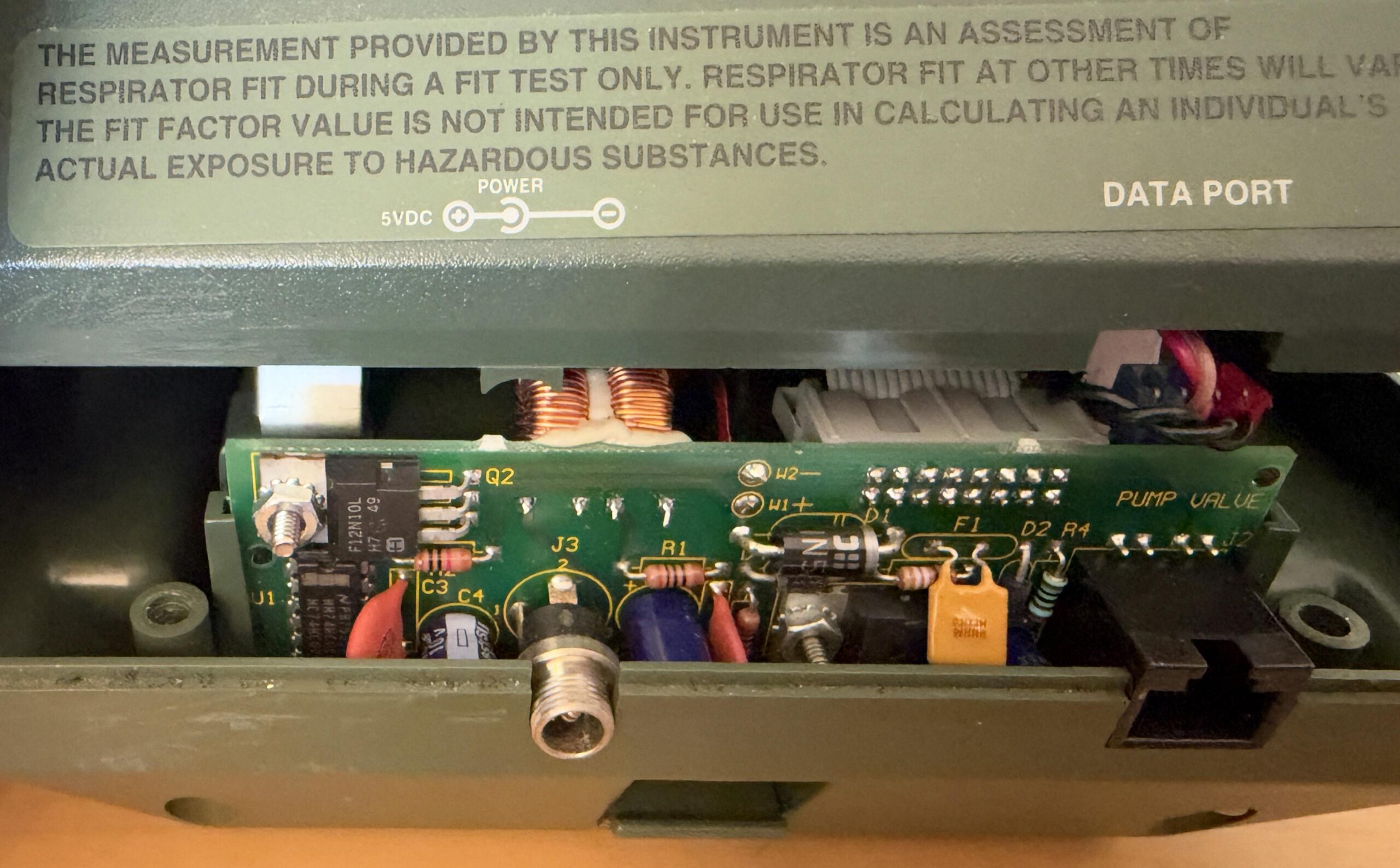
Note also “THE FIT FACTOR VALUE IS NOT INTENDED FOR USE IN CALCULATING AN INDIVIDUAL’S ACTUAL EXPOSURE TO HAZARDOUS SUBSTANCES” warning, which is an important point all too rarely understood out in the community – and the topic of an upcoming post (riveting stuff, I promise).
I’m rather curious if it’s possible to mix and match components, e.g. use the 8020M input/output board with an 8020, or to transplant the firmware chip between different devices. I suspect that it’s possible, but I’d rather not risk the possible downsides (if componentry ends up being damaged).
Postscript: I do realise that the view from the other side of the main PCB would likely be more interesting, as that would show any differences in the fluid paths. Accessing that side requires somewhat more work, but I do promise to take photos if I ever need to do so again. Looking in from the sides it’s quite clear that they’re all the same modulo the lack of post-pump filter on the 8020M.